A Home-Care Worker's First Visit to a New Client
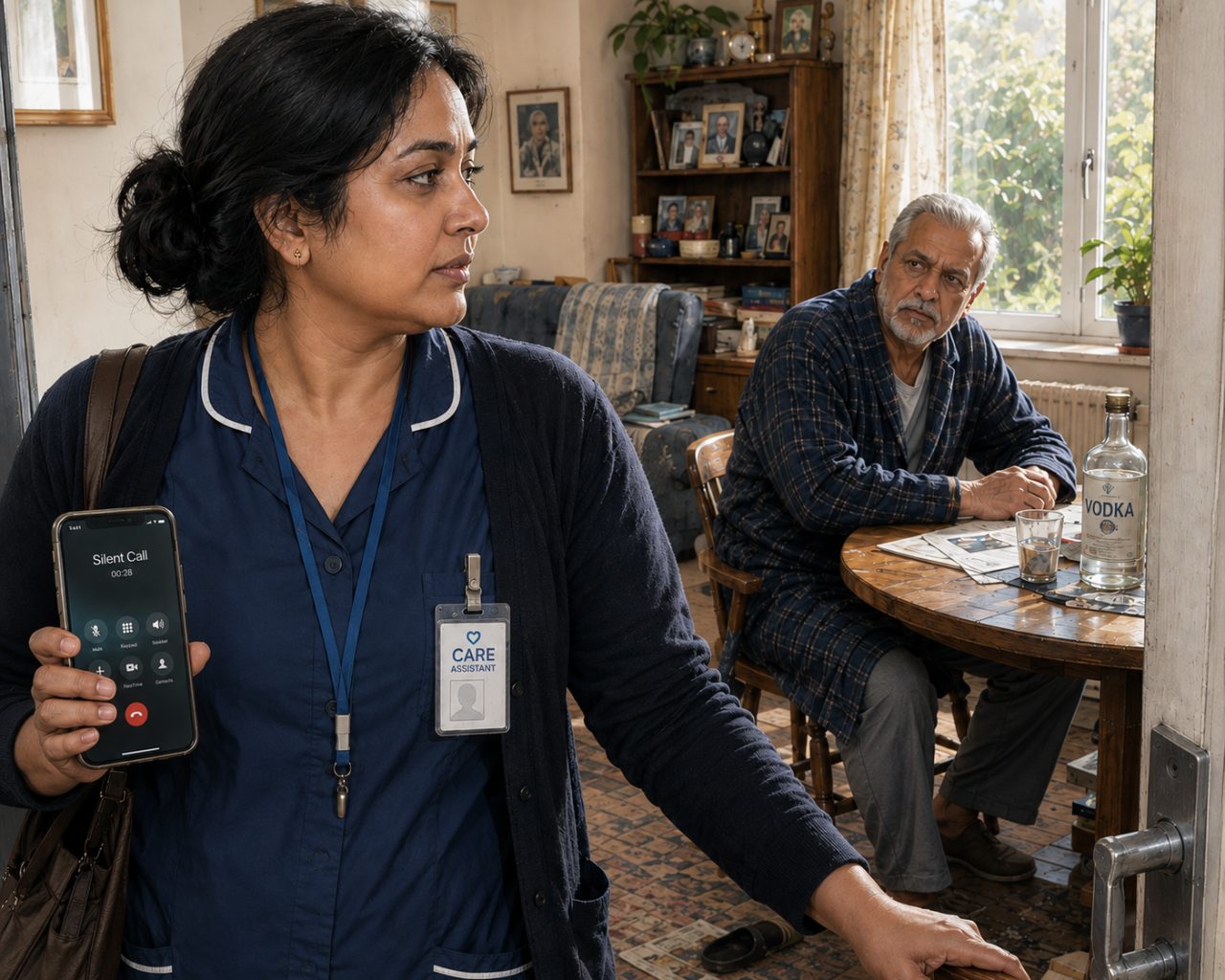
The address was at the end of a lane she'd never driven before, and the satnav gave up two turns from the door. Amina found the house anyway — small, curtains drawn, a car she didn't recognise parked at an angle across the drive. It was her first visit to this client, a name and a care plan and nothing else. She'd done a hundred first visits. This one just sat oddly with her.
Inside, the client was kind and glad to see her. But there was another person in the house — a relative, restless, moving between rooms, asking Amina questions that had nothing to do with care. How long are you here? Are you on your own today? Who knows you're coming? She answered lightly and kept her hands busy with the care plan, but she noticed she'd stopped taking her coat off. She noticed she'd chosen the chair nearest the door.
Nothing had happened. That was the hard part — there was nothing to point to, nothing you could put in an incident report. Just a pattern of questions and a prickle at the back of her neck that she'd learned, over the years, not to ignore.
She didn't reach for her phone in the open. She didn't want the questions to turn into something. Instead, on her way to the kitchen to fill a glass, she pressed the SilentCall shortcut in her cardigan pocket — one press, no screen, no sound. It connected and began to record.
Two minutes later her phone rang. It was her team leader, Priya, voice bright and completely ordinary: "Amina, sorry to interrupt — the four o'clock's been moved forward, are you able to wrap up?" It was the arrangement they'd agreed for exactly this: a call that gave her a reason to leave without anyone losing face. Amina smiled, made her apologies to the client, promised to rebook, and walked to her car with Priya still on the line, chatting about nothing, until the doors were locked and the engine was on.
Back at the office they looked at it together. Maybe it was nothing. Maybe the relative was just anxious and lonely. But the next visit was booked as a double, two carers, in daylight — and Amina never once felt foolish for the glass of water she didn't finish.
What made the difference: she didn't have to prove anything to anyone. She just needed a quiet way to bring another person into the room, and a plan they'd made before she ever needed it.
Staying safe on a first home visit
Home-care and community workers do some of their most important work alone, often meeting people and places for the first time. When a visit feels wrong, you rarely have hard evidence — only instinct — and that's reason enough to act. A quiet way to call for help, plus a pre-agreed "call me back" plan with a colleague, lets you leave a situation gracefully before it becomes one you have to manage.
A silent option matters because you can't always make an obvious call. With SilentCall, one discreet press records the situation and alerts your chosen contacts on any phone, with no app to install and nothing on screen. For immediate danger, emergency services can be reached silently too (999 + press 55 in the UK, 112 in the EU, Text-to-911 in the US).
FAQ
How can home-care workers stay safe on first visits? Do a quick risk check, share your schedule, plan your exit on arrival, and agree a "call me back" arrangement with a colleague. Keep a silent way to call for help within reach.
What should I do if a home visit feels unsafe but nothing has happened? Trust the instinct. Find a reason to leave, use a pre-agreed call-back, and reach help silently if needed. You don't need proof to protect yourself.
Can carers call for help without being seen? Yes — a silent service like SilentCall records and alerts trusted contacts with one press, no screen or sound.
Read the practical guide: Lone-worker safety without an app · How to call for help when you can't speak
Carry a quiet way out — get SilentCall.
SilentCall is a personal-safety service, not a replacement for emergency services. In a life-threatening emergency, always contact your local emergency number if you can safely do so.